While continuing to follow along with Whitman Publishing’s 100 Greatest Ancient Coins series, we have learned how early ancient coinage came to be, including the how, why, when and where. Author Harlan J. Berk helps us along today as we discover a much different answer to all those questions in regard to this next coin. As always, it is imperative to remember that this top 100 list features coins from the earliest onward. This means that their rankings are out of order.
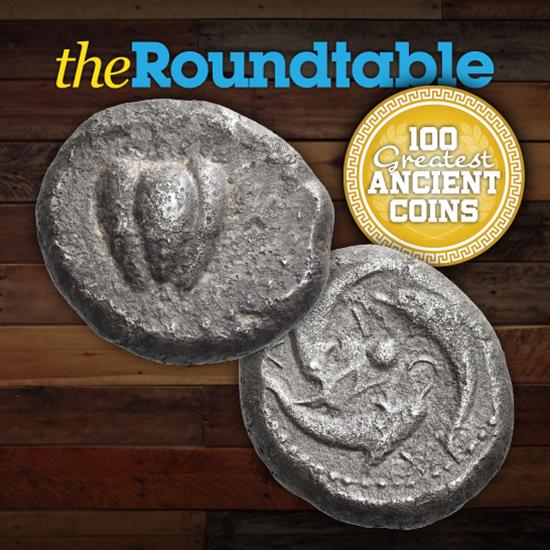
#91 – Melos Stater (Greece – Circa 430-416 BC)
Melos is an island that was settled by the Phoenicians and later Hellenized (made Greek) by the Dorians (one of four major ethnic groups of the ancient Greek people). During the Peloponnesian War, the once considered small, quiet island became a target for the Athenian empire. The Melians had complicated feelings about this as their ancestors who colonized the island were from Peloponnesus. They did not want to fight against their relatives, so they formed an alliance with the Spartans against Athens.
Their attempt at remaining neutral was foiled as the Athenians would not allow them the right to do so. As a means to pay for the defense of the island, Melo states were struck. However, Athens wanted no part in the Melians' neutrality, eventually conquering the island in 416 BC. They put all the men to death and sold the women and children into slavery in addition to melting all their coinage except for a small quantity.
In 1907, a group of children came upon these coins from Melos. Twelve coins were discovered as eight of them landed in the hands of Mr. R. Jameson who was a Scottish collector. Two years later, another 79 coins were found, making for a total of 91 Melos staters. Around 55 years later, another numismatist recorded that he could account for 84 coins with 18 different types. Some numismatists clash as to what should be considered a type versus a variant of one.
The obverse of the staters mostly feature what was thought to be a pomegranate. However, it is now referred to as an apple. The reverse is where the variety comes into play as some show dolphins, flowers, triskeles (ancient symbol), gorgons (monstrous female from Greek mythology i.e. Medusa), geometric designs, a ram’s head, and the head of a young warrior. It appears to Berk that all types (or varieties) were struck around the same time, leading him to believe that it is possible that those in charge of the striking of the coins put their own types on them.