
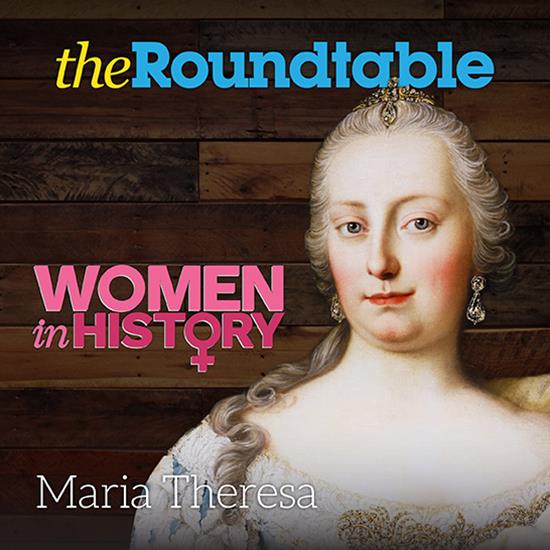
A powerful woman from the 1700s is the main character in our blog series today covering Whitman Publishing’s 100 Greatest Women on Coins Series. Author Ron Guth guides us through her early life, her rule, and her lasting impact on silver coinage that we see today.
#34 – Empress Maria Theresa of Austria
Born Archduchess Maria Theresa Walburga Amalia Christina in May 1717, she was the daughter of the Holy Roman Emperor Charles VI and Elisabeth Christine of the German duchy of Brunswick-Wolfenbuttel. Although the daughter of a Holy Roman Emperor, she was barred from becoming a Holy Roman Empress because she was a woman. She married in 1736 to Francis Stephen of Lorraine and had 16 children in 20 years and was able to become a Holy Roman Empress because of her marriage.
Maria and Francis I had several children that would go on to be powerful beings themselves. Joseph II would become Holy Roman Emperor and Leopold II would also step into that role following the death of his brother. Her daughter, Maria Antonia, would go on to become the queen of France. She also went by Marie Antoinette.
Ruling between 1740 and 1780, Maria would concede a lot of her power to Joseph II following the death of her husband in 1765. The death rocked her as she only dressed in black afterwards. During her reign, she was a conservative leader over religion and politics. She continued to strengthen the military and invoked taxation to improve the economy. She also created the Codex Theresianus and banned witch burnings. For her leadership and the state in which Austria was left when she passed, Maria is considered one of the most influential of the 18th century.
In 1741, Maria Theresa made her first appearance on Austrian coins. Several different types and denominations featured her portrait, including silver kreuzers and rare 10-ducat gold coins. One of the most recognizable perhaps is the silver taler, which has a restrike dated 1780. They are considered easy as far as collecting difficulty.